Deciphering End-to-End Encryption (E2EE)
End-to-End Encryption (E2EE): What It Protects and What It Doesn't
End-to-End Encryption (E2EE) ensures that data is encrypted at its origin and remains protected throughout transmission until it reaches the intended recipient. However, E2EE does not encrypt routing metadata such as:
Who is communicating
When and how often
Message size and timing
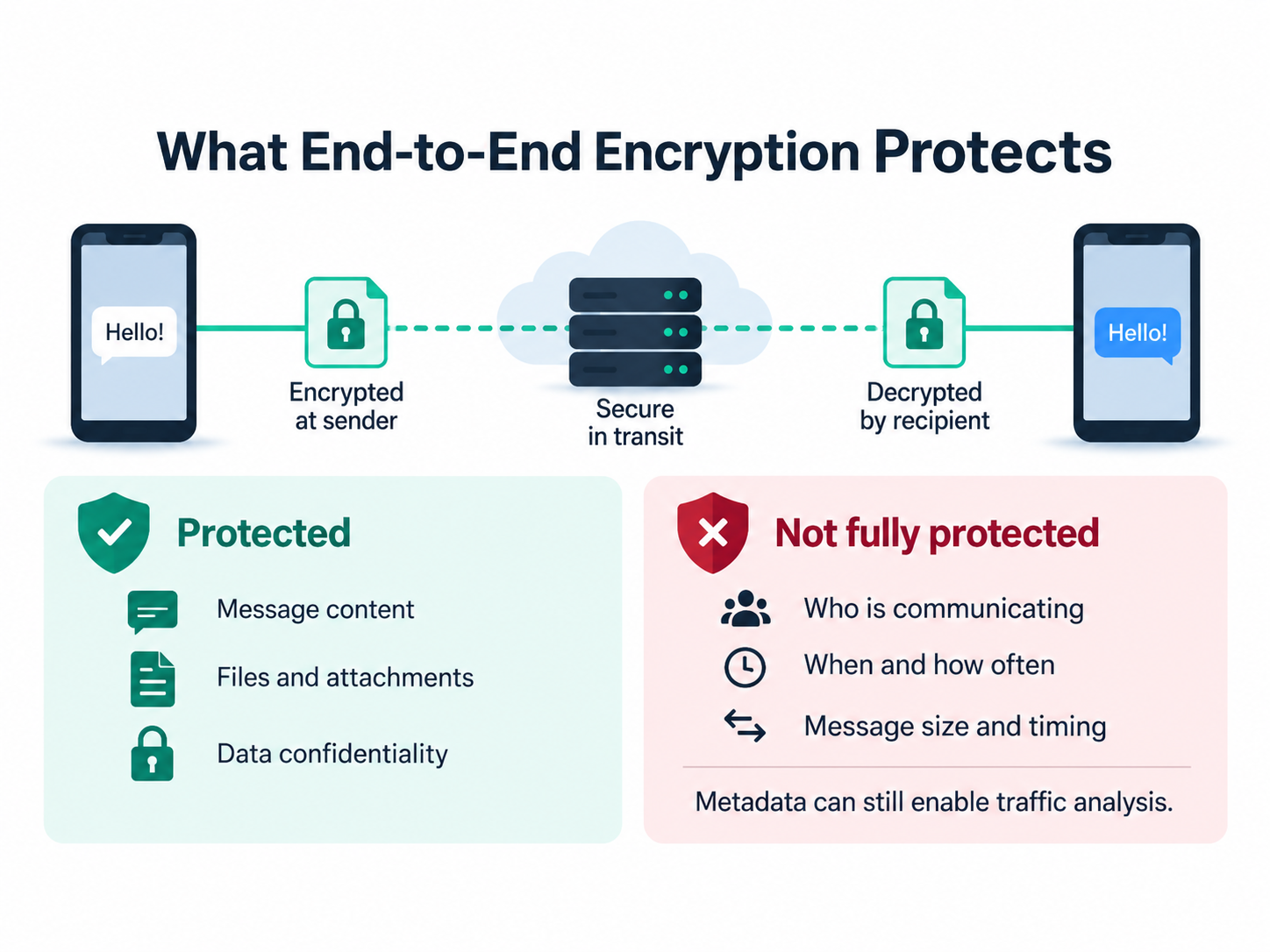
This limitation leaves room for traffic analysis attacks, where patterns in metadata can be exploited, even if the message content remains secure.
What Does E2EE Protect?
Data confidentiality: Yes
Traffic confidentiality: No
Factors That Influence E2EE Strength: The effectiveness of E2EE depends on several critical elements:
The encryption algorithms used, such as AES-256 or RSA-2048
Key management practices
Implementation quality: Poor coding or insecure applications can compromise protection
Stronger Alternatives
Commercial-grade encryption methods like IPsec (Tunnel Mode) and TLS with Perfect Forward Secrecy (PFS) go further, protecting the data and concealing more of the routing metadata than application-level E2EE. They do not hide it completely: IPsec Tunnel Mode conceals the inner IP addresses while the outer tunnel endpoints stay visible, and TLS still exposes the destination unless Encrypted Client Hello is used. Even so, these approaches offer stronger protection against interception and surveillance and are widely used in:
Banking systems
VPN-secured financial platforms
SWIFT network communications
Best Practices for Safer E2EE Communication
Use Trusted Applications
Choose well-reviewed apps with proven E2EE implementations such as Signal, WhatsApp, or iMessage. Avoid obscure or unverified apps that lack proper security audits.Verify Contacts
Confirm identities using safety numbers, QR codes, or fingerprint verification to prevent man-in-the-middle attacks.Keep Applications Updated
Regular updates patch vulnerabilities and improve encryption protocols. Enable automatic updates whenever possible.Secure Your Device
Use strong passwords, biometrics, and full-disk encryption. If your device is compromised, E2EE cannot protect your messages.Limit Metadata Exposure
Select apps that minimize metadata collection and consider using VPNs or Tor to obscure IP addresses and traffic patterns.Be Cautious with Backups
Cloud backups may not be encrypted end-to-end. Disable automatic backups or use apps that encrypt backups locally.Watch for Social Engineering
E2EE does not protect against phishing or impersonation. Be skeptical of unexpected messages or requests for sensitive information.Use Strong Authentication
Enable multi-factor authentication (MFA) for messaging accounts to add an extra layer of protection even if your password is compromised.Need further guidance? Contact us for a free 30-minute consultation to answer your most pressing questions about how to protect your digital assets and meet regulatory and client expectations when handling sensitive information.